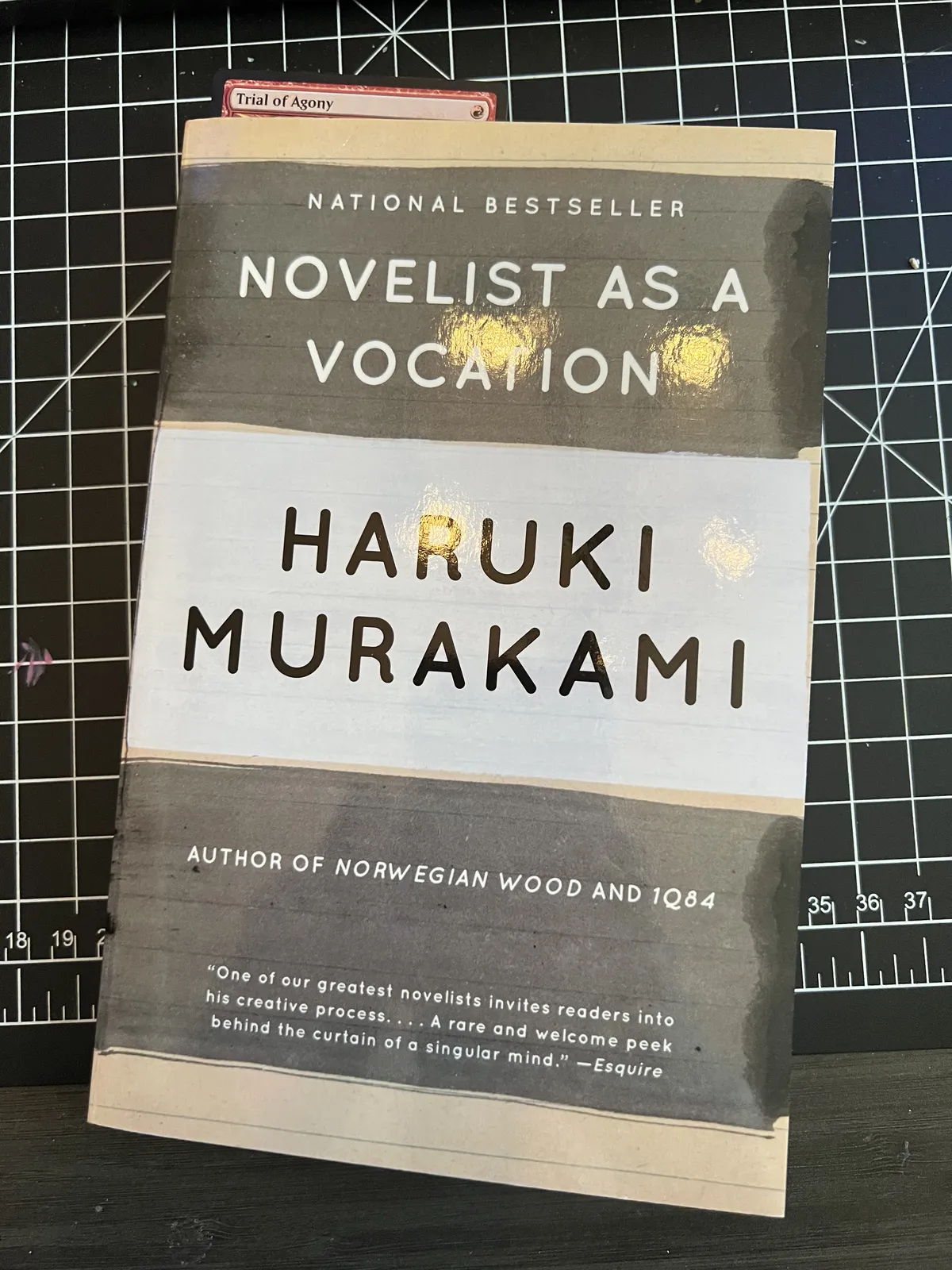
Review: Novelist As A Vocation - Murakami
It is very rare for me to read non fiction. The last time was during the pandemic when I read all six volumes of Virginia Woolf's letters. I would much rather, and get more out of, read personal stuff about the author than read about their grand ideas about how to be a great writer. AKA, craft books.
Murakami makes this very clear. He starts off by letting you know that all the circumstances that led him to his career were by him sitting down and doing the work. He didn't read On Writing or Save the Cat (they weren't out yet), instead he read books he liked to read and then decided to write something himself. He didn't pour through upper crust literature as a kid, he was reading pulp scifi he bought at the bookshops near the army base because he wanted to read the stories in the original English.
This is like learning Japanese so you can read Weekly Jump in the original text. His skill as a translator and led to the way he rights and how his stories work. None of this was taught in an MFA course or workshop. After college he got married and opened a jazz cafe, then in his 30's decided he had read enough novels that he would have a try at writing them. His first attempt won a beginners prize and he kept going from there.
Like, yes, if the very first book you write wins a National Book Award, you keep going. He states over and over that what he did to be successful at writing won't work for everyone else but feel free to try things out and see how they go. For example, he isn't a big fan of higher education for the sake of being there. He felt he gained more xp by doing things on his own, but at the same time the way things were when he was growing up is drastically different than today.
He essentially went to school, did alright, then graduated and got married. Him and his wife opened a jazz cafe in Tokyo that they ran for several years, only selling it once Murakami was in a position that his writing could support them. He didn't start writing till he was in his 30's. That's a big deal because I can't help but look at the current state of the lit world, and the world in general where if you aren't already at a professional level by 16 and at an internship by 18, then an MFA program with a debut novel in the works by 21 then you won't amount to anything. (Substitute MFA with like, a math PHD from MIT and an internship at Google, etc.)
Basically these days it feels like if you aren't already a burnt out professional by the time you're old enough to drink there is no point in trying because you are up against everyone else who is. Oh, and if you are late to the game then you just need to read every book ever written in your genre, listen to the podcasts, follow the trends, compete with everyone around you, and maybe you too can be successful.
The reality is that everyday normal people working day jobs are fully capable of making time for things they enjoy and excelling at them at a professional level. But, as he explains, you still have to but hard work and effort into it. He goes on about his daily routine just like most other authors. For some reason people love to hear about daily routines as though emulating them will yield the same results.
Sure, if I had no kids and a wife to do all my cooking, cleaning, and first draft analysis then yeah I might also have 4-5 books completed by now and not 8 first drafts sitting in my google docs. But I could also take note of his concept of making time to focus on what you are doing. He talks about writing at the kitchen table because he didn't have a desk starting out. He wrote in noisy cafes in Europe. He wrote wherever he could. That modern concept of the 5am writers club reeks of hustle culture to me. Almost as bad as the "You only work 8 hours a day you have another 8 hours to do your side hustle."
But I am not going to fault Murakami for using the time and space given to him to do what he does best. By all means if it works for him he needs to keep doing it because he is in his 70's now. Banana Yoshimoto is in her 60's. I need my faves to go on as long as they can. :D
One funny bit in the book is where he goes over his dealings with his American publishers. He points out how so many people say that if you aren't profitable to the agents then they ghost or drop you and how he never experienced that whatsoever. Like, duh, any agent who goes "meh this Murakami guy isn't making us Netflix deal money we should drop him" should be fired.
If you pick up this book expecting On Writing or a Brandon Sanderson class you will be disappointed. This is a collection of essays that explain how he got into writing and how he made a living doing so. You should read it, check it out at your library.